

Why You Shouldn’t Drive Drowsy
We are often reminded of the dangers of drinking and driving and using a cell phone while driving, but many drivers underestimate the dangers of driving when they’re tired. It’s an issue generally associated with professional drivers who spend their working days on the nation’s highways to earn a living.
However, the fact is that anyone can be affected by drowsy driving, and it is the silent killer on America’s roads. But, like anything else, education is the first step toward change. Here are some facts about drowsy driving.
Drowsy Driving Stats
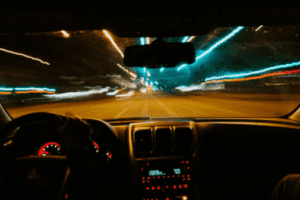
Photo by Gabe Pierce on Unsplash | License
According to studies, drowsy driving is a frequent factor in not only commercial vehicle collisions, but also in general car accidents.
- The National Highway Traffic Safety Administration (NHTSA) estimates that more than 100,000 reported accidents in the U.S. every year are due to drowsy driving.
- In 2019, the NHTSA estimates there were 697 deaths caused by drowsy driving.
- Almost half of all U.S. adult drivers report having driven despite feeling drowsy.
- Around 20% of adult drivers admit to having actually nodded off or fallen asleep while driving at least once in their lifetime.
It’s apparent that drowsy driving is a serious issue, but it can be difficult to ascertain the actual number of collisions related to drowsy driving. Official government statistics indicate that 1% to 2% of road accidents and crashes involve drowsy driving. However, some studies suggest that the real scale of the problem is probably much greater.
The NHTSA depends on witness testimonies, as well as police and hospital records for the causes of accidents. But no quantifiable measure is in place to determine exactly how many collisions are caused by drowsy driving. A survey of 3,500 drivers conducted by the AAA Foundation for Traffic Safety found that tiredness was a contributory factor in up to 9.5% of all crashes examined,
What You Need To Know About Drowsy Driving
The effects of driving tired can be more serious than many people realize. Staying awake for over 18 hours can have a similar effect on your body as having a blood alcohol content (BAC) of 0.05%. After 24 hours without sleep, it’s the same as having a BAC of 0.10%. When you think that the legal BAC limit is 0.08%, you can begin to understand that drowsy driving impairs a driver’s ability as much as drunk driving does.
Drowsy driving can be a result of job stress or nights interrupted by young children. However, other factors can lead to tiredness, such as the side effects from medication or an untreated sleep disorder. Whatever the cause, drowsy driving is extremely dangerous as it makes you less alert, dulls your senses, and slows your reaction times.
Driver Fatigue Warning Signs
There are certain warning signs that tell you when you are too tired to drive. It’s important that you recognize them and that you don’t continue driving until you have rested. Key indications of drowsy driving include:
- Trouble focusing, keeping your eyes open, and constant blinking.
- Yawning or rubbing your eyes repeatedly.
- Your head suddenly feels terribly heavy.
- You daydream or your mind wanders.
- Drifting from your lane, tailgating, and missing signs or exits.
- Feeling restless, irritable, or aggressive.
- You’re slower to react or you show poor judgment.
These are common symptoms, but it is crucial that you don’t ignore the signals that your body is tired.
Who’s Most At Risk of Drowsy Driving?
Any driver is at risk of nodding off behind the wheel, especially if you ignore the warning signs, but certain groups have a higher risk.
With a combination of inexperience and often driving at night, young drivers are at increased risk of drowsy driving, particularly males aged 16 to 25 years. Seniors are another risk group, but they’re more likely to be involved in drowsy driving incidents in the middle of the afternoon.
People who work nights or rotating or double shifts, or have more than one job, are six times more likely to have a drowsy driving-related accident. This group includes professions such as firefighters, police officers, doctors, nurses, and pilots.
Commercial drivers and business travelers spend a lot more time behind the wheel than the average driver. They often work long hours, and many commercial drivers have to contend with demanding deadlines and insufficient sleep.
How Hyundai SmartSense Can Help Tired Drivers
Hyundai vehicles come with SmartSense, a suite of standard and available driver assistance technologies. These features are designed to help, but they are no substitute for an alert driver, and you should never drive when you know you’re drowsy.
One of the most important features is driver attention warning. If the system detects any drowsy or distracted driving, it will alert you with audio and visual warnings so you know it’s time to pull over.
Smart cruise control with stop and go help you maintain a safe distance from the vehicle in front. Lane keeping assist uses audio and visual alerts to warn you if it detects that you are drifting out of your lane. If necessary, it will also use corrective steering to keep you in your lane. Blind-spot collision warning uses visual and audio alerts if you try to change lanes when there’s a vehicle in your blind spot.
Forward collision-avoidance assists with pedestrian detection recognizes when vehicles or pedestrians are in your path and warns you of a potential collision. If you don’t react in time, the system can automatically apply the brakes.
Rear cross-traffic collision warning helps you reverse out of parking spots with ease when there is limited visibility. The system warns you if it detects an approaching vehicle.
High beam assist switches between high and low beams for you. When it detects an oncoming vehicle, it will automatically switch to low beams and then switch back to high beams when it’s passed.
Visit us today at Hiley Hyundai of Fort Worth to explore all of the striking safety and technology features of the Hyundai vehicle lineup. Arrange a test drive to see how the driver assistance features can help keep you and your family safe on the road.
0 comment(s) so far on Why You Shouldn’t Drive Drowsy